
Reducing Downtime in DC Fast Charging Systems
Improving Availability, Reliability, and Serviceability with the IMD100
Insulation-related faults contribute to unplanned downtime in DC fast charging systems, and reactive protection alone often leads to unnecessary outages and longer repair times. Implementing continuous insulation monitoring using the IMD100 enables early fault detection, graded system responses, and predictive maintenance, helping to reduce both the frequency and duration of charger downtime while maintaining safety and compliance.
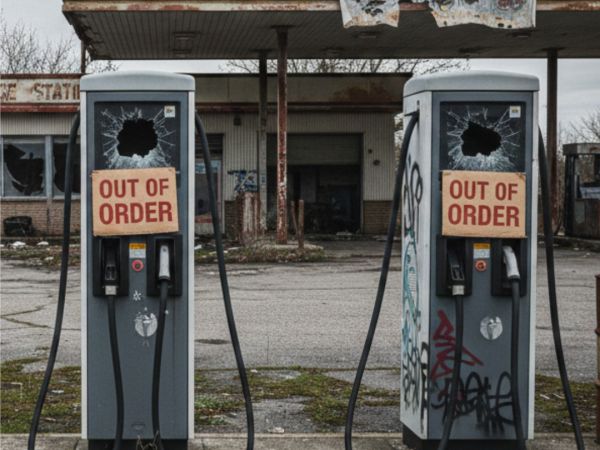
Reducing Downtime in DC Fast Charging Systems
The IMD100 enables proactive insulation monitoring in DC fast chargers, helping operators reduce unplanned downtime while maintaining safety and compliance. Availability is a critical performance metric for DC fast charging infrastructure.
Unplanned charger downtime directly impacts:
- Customer satisfaction
- Site utilisation and revenue
- Service costs and maintenance overhead
Many charger outages are triggered by electrical protection events, often related to insulation degradation in high-voltage DC systems. While protective devices are essential for safety, unnecessary or late detection of insulation issues can lead to avoidable downtime.
This application note explains how proactive insulation monitoring helps reduce unplanned outages by detecting insulation degradation early and enabling controlled system responses.
Common Causes of Downtime in DC Fast Chargers
Typical electrical causes of charger downtime include:
- Insulation degradation in HV cables
- Moisture ingress within power modules
- Contamination and conductive dust
- Connector wear and mechanical damage
- Aging insulation materials
- Intermittent earth leakage paths
In many cases, these faults develop gradually before reaching a level that triggers a protective shutdown.
Why Reactive Protection Increases Downtime
Conventional protection methods such as earth fault detection and residual current devices:
- Trigger after a fault has become conductive
- Often result in hard shutdowns
- Provide limited diagnostic information
- Require on-site inspection to identify root cause
This reactive behaviour leads to:
- Sudden charger outages
- Extended troubleshooting time
- Higher service costs
- Lost revenue during downtime
Proactive Insulation Monitoring
The IMD100 continuously measures insulation resistance between the DC bus and earth while the charger is energised and operating.
This enables:
- Early detection of insulation degradation
- Identification of slow-developing faults
- Differentiation between transient and persistent insulation issues
- Avoidance of nuisance trips
By detecting degradation before it becomes a hard fault, the IMD100 allows operators to intervene before a forced shutdown occurs.
Early Warning vs Hard Shutdown
The IMD100 supports configurable warning and alarm thresholds, allowing graded system responses:
| Insulation Condition | Typical System Response |
| Healthy insulation | Normal operation |
| Degrading insulation (warning) | Log event, notify operator, schedule inspection |
| Unsafe insulation (alarm) | Controlled shutdown or inhibit charging |
This graded approach reduces unnecessary downtime by:
- Avoiding immediate shutdown for non-critical degradation
- Allowing maintenance to be scheduled
- Enabling continued operation where safe to do so
Reducing Mean Time to Repair (MTTR)
When a charger does trip, insulation monitoring data helps reduce MTTR by:
- Providing fault classification (gradual vs sudden failure)
- Indicating whether degradation is trending
- Helping technicians focus on likely fault locations
- Reducing trial-and-error troubleshooting
The IMD100 therefore supports both fault prevention and faster recovery when faults occur.
Supporting Predictive Maintenance Strategies
With continuous insulation monitoring:
- Insulation trends can be tracked over time
- Repeated warning events highlight emerging issues
- Maintenance can be scheduled before failure
- Component replacement can be planned
This shifts charger maintenance from: Reactive → Predictive
Reducing both downtime frequency and downtime duration.
Operational Benefits for Charger Operators
By integrating the IMD100 into DC fast chargers, operators benefit from:
- Improved charger availability
- Fewer nuisance shutdowns
- Reduced emergency callouts
- Lower service costs
- Improved customer experience
- Higher site utilisation
For high-traffic charging sites, even small improvements in uptime can result in significant operational gains.
Compliance and Safety Alignment
Reducing downtime must never compromise safety. The IMD100 supports compliance with relevant insulation monitoring requirements in DC charging systems while enabling controlled system responses that balance safety with availability.
This ensures:
- Safety functions remain intact
- Protection remains standards-aligned
- Availability is maximised without increasing risk
Conclusion
Unplanned downtime in DC fast chargers is often driven by electrical insulation issues that develop over time.
By implementing continuous insulation monitoring using the IMD100 charger designers and operators can:
- Detect insulation degradation early
- Avoid unnecessary shutdowns
- Reduce fault-related downtime
- Improve service efficiency
- Increase charger availability
Proactive insulation monitoring turns safety diagnostics into a tool for operational reliability.
