
Detecting Insulation Degradation Before It Becomes a Fault
In many electrical systems, insulation resistance deteriorates gradually over time as a result of ageing, temperature, moisture, contamination, vibration, mechanical stress or other environmental and electrical influences. The system may continue to operate normally during this deterioration, with no obvious indication that a problem is developing.
Introduction
In an unearthed (IT) system, an Insulation Monitoring Device (IMD) provides continuous monitoring of the insulation resistance between the live conductors and earth. This allows developing insulation problems to be identified at an early stage – potentially well before they progress into a more serious earth fault.
This makes insulation monitoring particularly valuable in applications where maintaining availability, identifying developing faults and avoiding unexpected shutdowns are important.
Insulation failure is not always a sudden event.
What Does an IMD Monitor?
An IMD continuously monitors the insulation resistance between the active conductors of an unearthed electrical system and Protective Earth (PE). Under healthy conditions, the insulation resistance should be relatively high. If the insulation begins to deteriorate, the resistance between the electrical system and earth will start to decrease.
The IMD detects this change and can provide an alarm when the insulation resistance falls below a predetermined threshold. Importantly, the IMD does not need to wait for a significant fault current to flow before identifying the problem. It is monitoring the condition of the insulation itself.
Why Traditional Fault Detection May Not Provide an Early Warning
Conventional protection devices such as RCDs and Earth Leakage Relays perform an important but different function.
These devices generally monitor residual or leakage current and operate when that current reaches a defined level.
With gradual insulation degradation, however, there may initially be insufficient fault current to operate conventional protection. The equipment can therefore appear to be functioning normally while its insulation condition is progressively deteriorating.
An IMD provides a different level of visibility by continuously measuring insulation resistance.
This allows a developing problem to be detected before it progresses to the point where significant fault current flows or a more serious insulation failure occurs.
What Causes Insulation to Degrade?
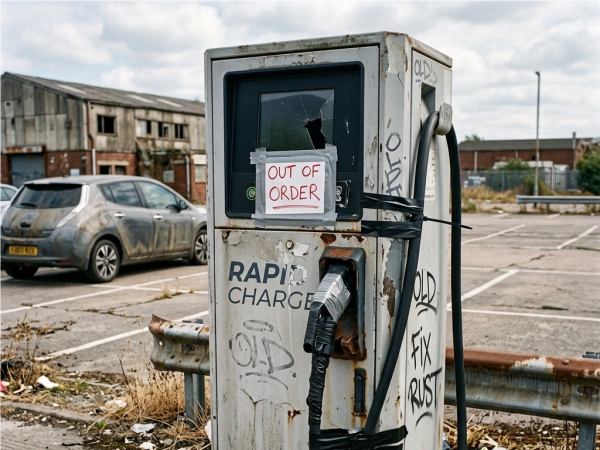
Insulation degradation can develop for many different reasons and may occur gradually while the electrical system continues to operate normally. Common causes include damaged cable insulation, moisture ingress, contamination, wear or damage to connectors, thermal cycling and ageing of materials. In EV charging equipment, coolant ingress or condensation can also contribute to a reduction in insulation resistance.
These conditions may initially cause only a relatively small change in the insulation resistance between the live conductors and Protective Earth (PE). However, if the underlying cause remains, the insulation resistance can continue to deteriorate until an alarm threshold is reached. An IMD continuously monitors for this deterioration, providing an opportunity to identify a developing problem before it progresses into a more serious insulation fault.

Figure 1 – Examples of conditions that can cause insulation resistance to deteriorate.
From Healthy Insulation to a Critical Condition
A key advantage of continuous insulation monitoring is that deterioration can be identified as the insulation resistance moves away from its normal healthy condition. The process may be gradual. Moisture, contamination, mechanical damage or ageing can begin to reduce insulation resistance without immediately preventing the equipment from operating.
As the insulation resistance continues to fall, the IMD can provide an alarm when a defined threshold is reached. If the deterioration progresses to a critical level, the system controller can then take the appropriate action, which may include preventing further operation.
This progression is illustrated below.
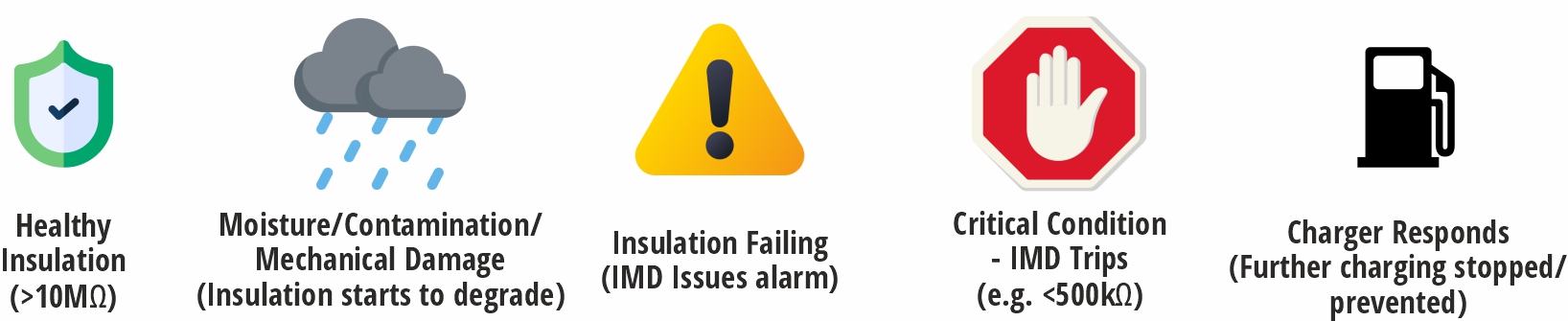
Figure 2 – Example of the progression from healthy insulation through degradation to a critical insulation condition.
This provides an important distinction between an IMD and protection that relies upon detecting fault current: the IMD is continuously monitoring the condition of the insulation and can therefore identify deterioration as it develops.
The Value of Monitoring Trends
Reaching an alarm threshold is not the only useful information that continuous insulation monitoring can provide. Where the measured insulation resistance is communicated to a supervisory controller, changes can be recorded and analysed over time. A system whose insulation resistance remains consistently high presents a very different maintenance picture from one where the resistance is progressively decreasing.
For example, a gradual reduction from several megohms towards hundreds of kilohms may indicate that insulation deterioration is developing, even before a configured alarm threshold has been reached.
Monitoring this trend can therefore provide valuable diagnostic information and support condition-based or preventative maintenance.
Example – DC EV Charging
Continuous insulation monitoring is particularly important within DC EV charging equipment, where the DC power circuit is typically operated as an unearthed system. Consider insulation within the high-voltage DC circuit beginning to deteriorate because of moisture, contamination, cable damage or component ageing. Initially, the charger may continue to operate normally, however, the insulation resistance between the DC conductors and PE begins to decrease.
An IMD continuously monitors this resistance and can identify when it falls below the required threshold, allowing the charger controller to generate an alarm or take appropriate action. Without continuous insulation monitoring, the developing condition may remain undetected until it becomes significantly more severe.
Early detection therefore provides an opportunity to identify and investigate the source of the deterioration before it progresses into a more serious insulation fault, helping to improve system safety, availability and maintainability.
Broyce Control IMD100
The IMD100 is designed for continuous insulation monitoring of unearthed DC systems operating at voltages up to 1000 VDC. Developed particularly with DC EV charging applications in mind, the IMD100 continuously monitors insulation resistance between the DC system and Protective Earth and provides the charger controller with the information required to respond appropriately to a developing insulation fault.
With isolated Modbus RTU communications, measured insulation resistance can also be communicated to the charger controller, allowing the insulation condition to be monitored as part of the wider charging system.
The IMD100 is UL 2231-1 and UL 2231-2 Recognised and provides a compact DIN rail mounted solution for integration into DC charging equipment.
Conclusion
Insulation failure does not necessarily occur without warning. Moisture, contamination, ageing, thermal stress, mechanical damage and component deterioration can all cause insulation resistance to decrease progressively over time. Traditional fault protection remains essential, but its purpose is different. It may only respond once sufficient fault or leakage current exists.
An IMD continuously monitors the insulation condition of an unearthed system, providing an opportunity to identify deterioration at an earlier stage. By detecting a reduction in insulation resistance before it develops into a more serious fault, continuous insulation monitoring can help maintenance teams move from reacting to failures to identifying developing problems before they result in unexpected downtime.
