

A phase reversal fault is a situation where two phases in a three phase system have been swapped. This typically occurs during equipment installation, upgrades or general maintenance.
3-phase motors and other rotating equipment rely on the order of the phases to be correct. That is, L1, L2 and L3 must connect to the relevant terminals on the motor to ensure it rotates in the correct direction. If the phase order or sequence is incorrect, the motor will rotate in the wrong direction therefore lead to equipment damage, failure or even injury to personnel.
Fig. 1 shows a wiring example where the connections to the motor are correct so the motor rotates in the intended direction.

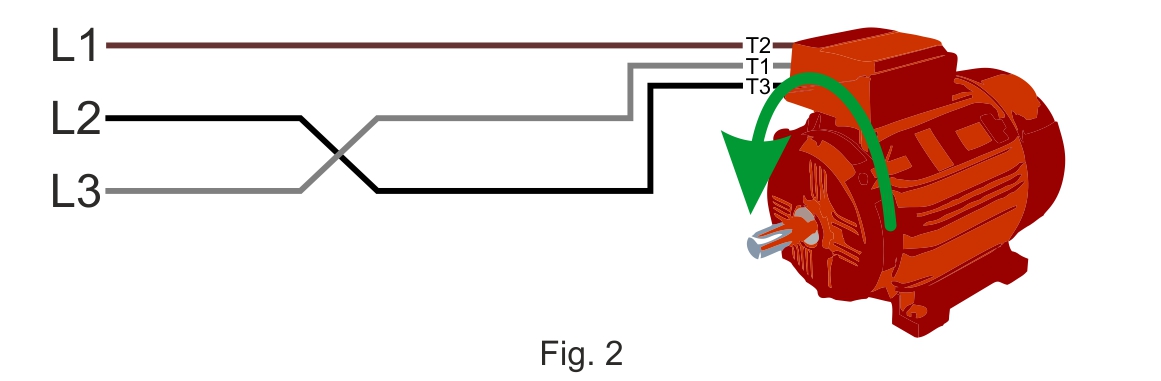
However, when L2 and L3 are swapped as in Fig. 2, the motor then rotates in the wrong direction.
Prevention of this scenario is relatively straight forward by the addition of a 3-phase monitoring relay that will detect when two phases are reversed. In conjunction with a suitably rated contactor used to switch the supply to the motor, if the relay detects the phase sequence is correct, the contactor will energise and allow the motor to run. If the phase sequence is incorrect the contactor not energise and hence prevent the motor from running.
